
By DeBinge Ltd. Editorial Team · Updated 2026-09-06
Options range from 24-hour inpatient programs to outpatient services requiring 9-15 hours weekly, combining detoxification, behavioral therapy, and medication-assisted treatment tailored to each person’s needs. Sustained-release Naltrexone implants offer Based on DeBinge’s clinical experience in The Bahamas since 2018, the implant typically provides its strongest craving and relapse-prevention support on average 9 months, while clinically meaningful opioid-receptor blockade may persist for longer, in some patients up to about 15 months. This longer blockade may continue to reduce opioid effects and overdose risk. of continuous craving-blocking support, eliminating daily medication while stabilizing recovery from alcohol, opioid, cocaine, methamphetamine, or gambling addiction.
Addiction treatment options range from counseling and support groups to medical interventions like naltrexone implants, which DeBinge Ltd. provides to block cravings for months without daily pills. Evidence-based approaches, including SAMHSA’s 24/7 National Helpline at 1-800-662-4357, guide individuals and families toward personalized recovery plans addressing alcohol, opioid, and substance use disorders effectively.
What Will You Accomplish With This Guide?
This guide equips families and individuals with a clear framework for evaluating addiction treatment options before committing to any program. Millions of Americans live with a substance use disorder, and it remains a significant public health issue nationwide. Choosing a path forward without understanding the medical landscape carries real risk: wasted time, repeated relapse, and prolonged suffering for the whole household.
Readers finish this guide able to compare evidence-based addiction care models side by side, rather than relying on guesswork or fear. The material covers how medication-assisted treatment interrupts cravings at the biological level, why behavioral therapy options address the psychological drivers of use, and how to weigh rehab vs outpatient settings against a person’s daily obligations and severity of use. DeBinge Ltd. contributes one specific tool to that comparison: a sustained-release Naltrexone implant designed to block cravings for alcohol, opioids, cocaine, methamphetamines, and gambling for Based on DeBinge’s clinical experience in The Bahamas since 2018, the implant typically provides its strongest craving and relapse-prevention support on average 9 months, while clinically meaningful opioid-receptor blockade may persist for longer, in some patients up to about 15 months. This longer blockade may continue to reduce opioid effects and overdose risk.. The implant works quietly in the background, without the daily ritual of pill-taking that many patients abandon within weeks.
Can Someone Really Recover Long-Term Without Daily Medication?
Yes. The implant approach removes the daily decision point that often triggers relapse. A single procedure delivers continuous support for an extended period. Patients rebuild routines, relationships, and self-respect while the medication works silently underneath.
Does Recovery Look the Same for Everyone?
No single method fits every case. Recovery is possible for everyone with effective treatment. The right combination of medication, therapy, and setting depends on personal history and severity.
By the end of this guide, readers understand not just what an implant does. Where it fits within a broader, evidence-based recovery strategy.
Who Should Consider Naltrexone Implant Therapy?
Candidates for Naltrexone Implant therapy include people facing addiction to alcohol, opioids, cocaine, methamphetamines, or gambling. DeBinge Ltd.’s implant supports each of these conditions through a single sustained-release device. Left untreated, these disorders erode relationships, finances, and physical health over time. Without a biological mechanism to blunt cravings, relapse risk stays elevated even after willpower and motivation return.
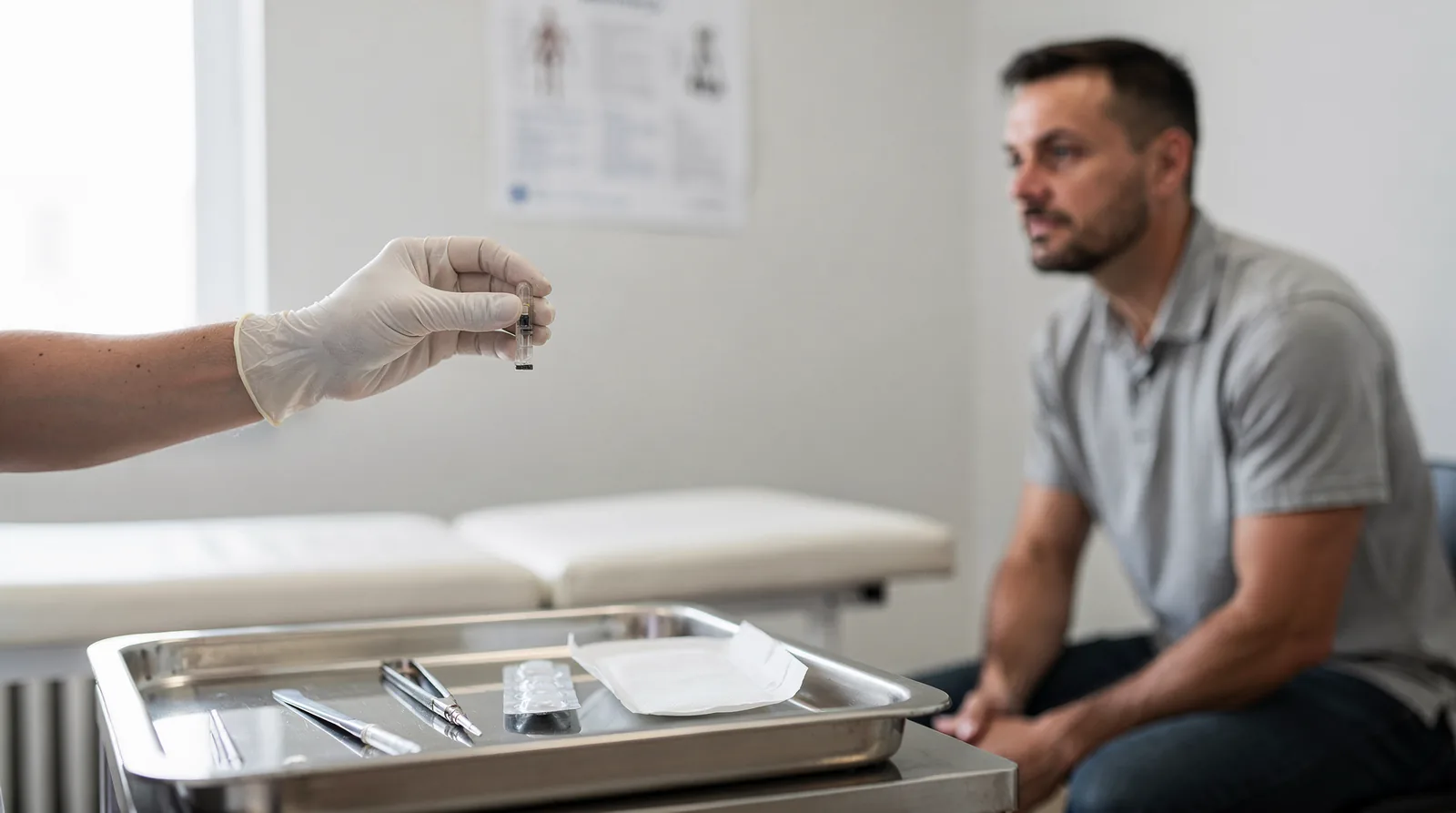
The Naltrexone Implant works as a small medical device placed under the skin. It gradually releases medication that reduces cravings for alcohol, opioids, and other addictive substances. This design suits candidates who need continuous support rather than a treatment that depends on daily decision-making.
Is the implant right for someone new to recovery, or only for long-term cases?
The implant provides long-term support specifically for individuals already committed to recovery. Candidates who have made a firm decision to stop using a substance. Need pharmacological reinforcement against cravings, fit this profile best. It functions as a support structure for sustained sobriety, not a substitute for that initial commitment.
Effective evidence-based addiction care never applies a single template to every patient. Co-occurring mental health conditions, trauma history, and health-related social needs all shape whether implant therapy fits a given case. A sound treatment plan accounts for each person’s own situation before any device is placed.
Strong candidates for this approach typically show the following:
- A documented pattern of addiction to alcohol, opioids, cocaine, methamphetamines, or gambling
- A stated commitment to long-term recovery rather than short-term detox alone
- No co-occurring condition that would contraindicate Naltrexone use
- Interest in addiction-treatment-options-005 that reduce reliance on daily oral medication
Medical evaluation at a qualified clinic determines final suitability for each candidate.

What Evidence Supports Naltrexone Implant Treatment?
Scientific research grounded in pharmacology, not anecdote, supports Naltrexone implant treatment. The American Psychological Association defines evidence-based addiction care as the integration of the best available research with clinical expertise, applied within the context of each patient’s characteristics and background. Treatment professionals across the field rely on approaches that scientific research has shown to work, rather than untested or trend-driven methods. That standard shapes how DeBinge Ltd. designs and delivers its Naltrexone Implant program.
The mechanism itself explains why this approach ranks among credible addiction treatment options. The implant disrupts the brain’s addiction pathways directly, reducing cravings and stabilizing recovery over an extended period. It works by blocking the brain’s reward system, preventing opioid receptors from responding to alcohol, opioids, and other addictive substances. This receptor-blocking action is the pharmacological basis for reduced cravings. Lower relapse risk, forming a core piece of medication-assisted treatment.
Is the Naltrexone Implant a proven medical treatment?
Yes. It functions as a form of medication-assisted treatment, a category recognized within evidence-based addiction care for supporting recovery from alcohol and opioid use disorders. The implant’s design reflects decades of pharmacological research into opioid receptor blockade rather than an experimental or unproven concept.
What makes DeBinge’s implant different from other options?
The version offered at DeBinge Ltd. is unique to this clinic and unavailable elsewhere. That distinction matters for patients comparing addiction treatment options. Not every implant formulation delivers the same sustained-release profile or receptor-blocking consistency.
Family members researching rehab vs outpatient paths. behavioral therapy options alongside medical intervention, should recognize that implant therapy addresses the physiological side of addiction. It complements, rather than replaces, counseling-based recovery work.
How Does Medication-Assisted Treatment Compare to Other Options?
Medication-assisted treatment works alongside, not against, other recovery methods. Evidence-based treatment modalities include cognitive-behavioral therapy, medication-assisted treatment, and group counseling, with effectiveness supported by more than 40 years of clinical research. No single approach stands alone as sufficient for lasting recovery.
Comprehensive care blends multiple modalities: detoxification, behavioral therapy options, medication, and ongoing support. Removing any one piece weakens the whole structure. A patient who completes detox but skips therapy often faces the same triggers with fewer defenses. One who attends counseling without medical support may still battle cravings strong enough to derail progress.
Is Medication-Assisted Treatment Better Than Therapy Alone?
Neither replaces the other. Medication addresses the biological pull of cravings; therapy addresses the behavioral patterns feeding addiction. Combined, they target the disorder from two directions instead of one.
What Makes an Implant Different From Daily Medication?
Daily pills demand daily willpower, and missed doses open the door to relapse. The Naltrexone Implant delivers sustained release for Based on DeBinge’s clinical experience in The Bahamas since 2018, the implant typically provides its strongest craving and relapse-prevention support on average 9 months, while clinically meaningful opioid-receptor blockade may persist for longer, in some patients up to about 15 months. This longer blockade may continue to reduce opioid effects and overdose risk., blocking cravings without that daily burden. This design allows patients to focus energy on rebuilding relationships and routines rather than managing a pill schedule.
Consider the comparison below when evaluating addiction treatment options:
The implant does not replace counseling or peer support. It removes the daily medication burden. Patients can devote attention to the deeper work of emotional healing, freeing them from the constant struggle that defines untreated addiction.
What Behavioral Therapy Options Complement Medical Care?
Counseling and peer support strengthen the biological effects of the naltrexone implant, addressing the psychological patterns that medication alone cannot reach. Structured addiction treatment options work best when a medical intervention. A behavioral one operate together, each reinforcing the other’s gains.
Do mutual-help groups actually reduce relapse?
Evidence points to a clear yes. Family involvement paired with mutual-help groups such as Alcoholics Anonymous significantly improves long-term recovery outcomes, cutting relapse rates by 30 to 50 percent. That range represents a substantial protective effect, one that no single medical device replicates on its own. Pairing the implant with structured group support gives patients a dual line of defense against setback.
What role does behavioral therapy play alongside the implant?
The implant clears the neurological noise; therapy rebuilds the thinking underneath it. Evidence-based addiction care models rely on this combination. A pharmacological floor supporting an active behavioral rebuild, rather than either standing alone as a complete solution.
Patients considering medication-assisted treatment benefit from layering in structured support systems. Recommended additions include:
- Individual counseling — addresses trauma, triggers, and thought patterns feeding compulsive use.
- Family involvement — repairs trust and builds an accountability network at home.
- Mutual-help group attendance — provides peer accountability shown to cut relapse by the 30-50 percent margin noted above.
- Ongoing case check-ins — track emotional progress alongside the implant’s physical protection window.
DeBinge’s model leads with compassion and innovation, keeping patient comfort, support, and sustainable healing at the center of every recovery plan. The company’s approach favors long-term satisfaction over short-lived pleasure, retraining the brain’s reward pathways toward lasting stability rather than momentary relief. With cravings blocked and the mind clear, patients gain real room for emotional healing, work that only happens when medical treatment and behavioral therapy options move forward together, not in isolation. Reviewing available rehab-vs-outpatient structures alongside these behavioral supports helps families match the right combination of care to each patient’s circumstances.
Rehab vs Outpatient: Which Setting Fits You?
Severity of the addiction, not personal preference, determines the right setting among addiction treatment options. Intensive inpatient programs provide 24-hour care, while flexible outpatient services run 9 to 15 hours weekly. Choosing between the two carries real stakes: mismatched intensity often leads to early relapse, wasted time, and renewed financial strain on families already stretched thin.
Families weighing a rehab vs outpatient decision should first ask which setting matches the person’s daily risk of relapse and physical dependency. Comprehensive, evidence-based addiction care combines detox, behavioral support, and — increasingly — non-oral options such as long-acting implants. The comparison below outlines the core structural differences.
How long does addiction treatment usually last?
Recovery efforts typically require a minimum of 90 days for the initial intervention phase. Ongoing support and relapse prevention then extend for months or even years afterward. This long horizon explains why many families look beyond a single facility stay toward sustained, lower-burden solutions.
Duration matters because sobriety rarely stabilizes overnight. Medication-assisted treatment and behavioral therapy options — including counseling and cognitive-behavioral approaches — reinforce progress made during inpatient or outpatient phases. DeBinge Ltd. offers a complementary path: a minimally invasive implant procedure performed by experienced medical professionals at its qualified clinic.
Unlike traditional inpatient rehab, this implant option supports recovery without requiring a lengthy hospital stay. For families balancing work, caregiving, and treatment costs, that distinction often shapes the entire decision. Selecting a setting, then, should never rest on convenience alone. It must reflect the addiction’s severity, the length of commitment required, and the level of daily supervision the individual genuinely needs.
What Are the Steps to Begin Treatment?
Four stages define the path to treatment: consultation, medical evaluation, implant placement, and follow-up support. Delaying any one of these stages prolongs cravings and raises the risk of relapse. A clear sequence keeps recovery on track from the first appointment.
- Schedule an initial consultation. A candidate discusses their history of addiction to alcohol, opioids, cocaine, methamphetamines, or gambling with the clinic team.
- Complete a medical evaluation. Clinicians at DeBinge’s qualified clinic review overall health and confirm suitability for the procedure before scheduling insertion.
- Undergo implant insertion. Experienced medical professionals at the clinic perform a minimally invasive procedure to place the implant under the skin, avoiding lengthy hospital stays.
- Begin the release phase. Once positioned, the implant slowly releases naltrexone into the patient’s system, blocking opioid receptors from responding to alcohol, opioids, and other addictive substances.
- Attend follow-up appointments. Ongoing check-ins track progress and reinforce the emotional and behavioral work that sustains sobriety.
What Happens During the Insertion Procedure?
The procedure takes place at DeBinge’s clinic under the direct care of trained medical staff. It requires no extended hospital admission, and patients typically resume daily activities shortly afterward. This minimally invasive step is central to how addiction treatment options at DeBinge differ from daily pill regimens.
Is Outside Support Available Before or During Treatment?
Families weighing rehab vs outpatient paths. Anyone seeking guidance before starting, can reach SAMHSA’s National Helpline, a free, confidential, 24/7, 365-day service connecting individuals and families to treatment referrals.
Across these steps, DeBinge’s model reflects evidence-based addiction care: a structured, medically supervised process rather than a single fix. Countless individuals have used this framework to rebuild self-respect, restore relationships, and move toward a stable future.
What Mistakes Should You Avoid in Recovery?
Certain errors undermine recovery before it truly begins. Substance use disorder qualifies as a treatable, chronic disease, marked by cognitive, behavioral, and physiological symptoms that persist despite serious consequences. Treating it as a short-term problem, rather than an ongoing condition requiring sustained management, ranks among the most damaging mistakes families and individuals make.
Common Recovery Mistakes
- Expecting a single method to solve everything. No single approach effectively treats substance use disorders alone; detoxification, behavioral therapy, medication, and ongoing support must work together.
- Skipping structured medical guidance in favor of willpower alone.
- Relying solely on daily oral medication, where a missed dose opens the door to relapse.
- Abandoning treatment once early cravings subside, before stability takes hold.
Why Do So Many People Relapse After Treatment?
Relapse often follows gaps in coverage — missed pills, lapsed appointments, or the false belief that cravings disappear permanently after a few weeks. DeBinge Ltd.’s sustained-release medication-assisted treatment-005 addresses this exact gap. The naltrexone implant works silently to block cravings for Based on DeBinge’s clinical experience in The Bahamas since 2018, the implant typically provides its strongest craving and relapse-prevention support on average 9 months, while clinically meaningful opioid-receptor blockade may persist for longer, in some patients up to about 15 months. This longer blockade may continue to reduce opioid effects and overdose risk., removing the daily decision point where relapse risk spikes.
Is Combining Therapy With Medical Support Necessary?
Yes. Evidence-based addiction care-005 consistently combines medical and behavioral elements rather than choosing one over the other. Pairing implant-based support with behavioral therapy options-005 gives patients both physiological stability and the emotional tools to sustain it.
Families evaluating addiction-treatment-options-005 should also avoid assuming rehab-vs-outpatient-005 is a binary, either-or choice. Severity, history, and support systems should guide that decision, not convenience. DeBinge Ltd. has helped countless individuals gain lasting control over their lives, rebuilding self-respect, stable relationships, and genuine hope through this combined, disciplined approach.
Conclusion
In closing, the landscape of addiction treatment continues to evolve with evidence-based medical interventions that address the neurobiological foundations of substance dependence and behavioral addiction. Sustained-release pharmacological approaches, coupled with professional clinical support, represent a significant advancement in recovery methodology. Individuals seeking comprehensive treatment solutions benefit from understanding the full spectrum of available options, including innovative implant-based therapies that provide extended therapeutic coverage and reduce the burden of daily medication management. The path to sustained recovery requires selecting a treatment modality aligned with individual clinical needs. Personal recovery objectives, ultimately enabling patients to reclaim autonomy and rebuild meaningful lives free from the constraints of active addiction.